
Polyester staple fiber (PSF) has emerged as one of the most widely used and versatile materials in the furniture and upholstery industry, particularly for sofas, chairs, and other soft furnishings. In a market where durability, comfort, cost-effectiveness, and aesthetics all play vital roles, polyester staple fiber stands out as a material that successfully balances performance with value.
This article explores the nature of polyester staple fiber, its role in upholstery fabrics, its benefits and limitations, production processes, performance characteristics, sustainability considerations, design potential, and future trends.
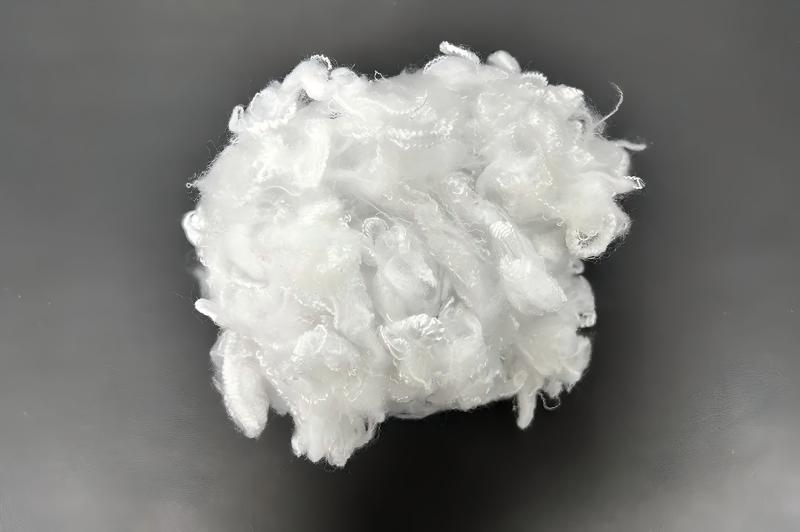
What Is Polyester Staple Fiber?
Polyester staple fiber (PSF) refers to short lengths of polyester fiber — typically cut to a specific staple length — that are spun and processed into yarns or used as filling material. Polyester is a petroleum-derived synthetic polymer, most commonly polyethylene terephthalate (PET). While continuous filament polyester fibers are used for smooth, long yarns in textiles, staple fibers are shorter segments that resemble natural fibers like cotton or wool in length.
PSF can be categorized by staple length, denier (fiber thickness), and physical finish, making it highly adaptable for various textile applications. In upholstery, PSF is a foundational material used in fabric covers, cushioning layers, batting, quilting, and non-woven layers.
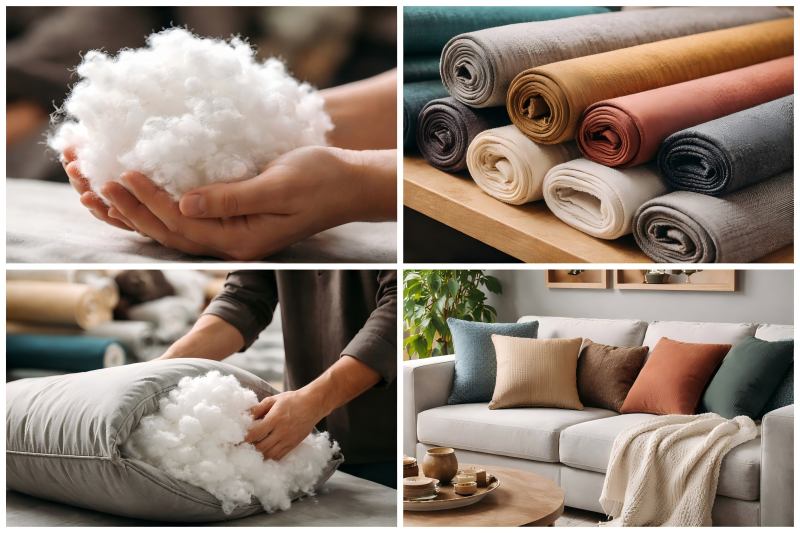
Why Polyester Staple Fiber Matters in Sofa and Upholstery Fabrics
Upholstery fabrics must satisfy a unique combination of criteria:
- Durability — stands up to frequent use and friction
- Comfort — soft hand feel, cushioning, and resilience
- Appearance — colorfast, uniform surface with design flexibility
- Minimal maintenance with excellent stain resistance and easy cleaning
- Cost-effective performance without sacrificing quality
Polyester staple fiber is widely used in upholstery because it contributes positively to all of these factors.
Key Characteristics and Performance of PSF in Upholstery
a. Durability and Wear Resistance
Polyester fibers are known for their high tensile strength and abrasion resistance, which translates into upholstery fabrics that withstand heavy seat usage, repeated motion, and friction without breaking down quickly. Compared to many natural fibers, polyester tends to resist pilling and wear longer.
b. Resilience and Elastic Recovery
In sofa cushions and padding, resilience — the ability to recover shape after compression — is critical. PSF offers excellent elastic recovery, helping furniture retain its form and preventing sagging over time.
c. Colorfastness and Aesthetic Versatility
Polyester fibers accept a wide range of dyes and pigments, resulting in vibrant, long-lasting colors. PSF fabrics resist fading when exposed to light and detergents, making them ideal for living rooms and high-use environments.
d. Moisture Resistance and Easy Care
Unlike some natural fibers, polyester does not absorb moisture readily. This trait:
- Makes fabrics dry quickly
- Reduces the risk of mold or mildew
- Aids stain resistance
For households with children or pets, easy maintenance and washability are major advantages.
e. Thermal and Chemical Properties
Polyester is thermoplastic, meaning it softens and melts at higher temperatures. This allows manufacturers to heat-set textures and finishes within the fabric. PSF also resists many chemicals and solvents, adding to its durability.
How PSF Is Used in Upholstery
Polyester staple fiber plays multiple roles in sofa and upholstery products:
a. Fabric Covers and Textile Yarns
PSF is blended with other fibers — such as cotton, wool, or viscose — to produce upholstery yarns with balanced aesthetics and performance. These yarns are woven or knitted into upholstery fabrics with varying textures, patterns, and weights.
Blending PSF with natural fibers can:
- Improve softness and hand feel
- Maintain the strength and durability contributed by polyester
- Enhance cost competitiveness
b. Non-Woven Upholstery Components
Non-woven layers made of PSF are used in backing fabrics, interlinings, and reinforcement layers to:
- Improve the stability of woven textiles
- Provide structure to cushions and arm panels
- Act as dust barriers and support layers
c. Cushioning and Padding
PSF is a primary raw material in polyfill, batting, and fiberfill used inside cushions, pillows, and upholstered furniture interiors. These fillings provide bulk, loft, and comfort while maintaining structural integrity.
d. Quilting and Stitching Layers
In more sophisticated upholstery designs, PSF is used in quilted panels and decorative stitching to add texture and comfort without excessive weight.
Technical Performance Metrics
When furniture engineers and textile designers evaluate upholstery fabrics, they typically test key metrics including:
| Property | PSF Contribution |
| Tensile Strength | High — resists breakage |
| Abrasion Resistance | Excellent — longevity |
| Elastic Recovery | Very Good — maintains shape |
| Pilling | Lower tendency than many natural blends |
| Colorfastness | Excellent — resists fading |
| Moisture Uptake | Low — quick drying |
| Flammability | Variable — often treated for compliance |
PSF fabrics often undergo performance certification tests such as Martindale wear testing, Wyzenbeek abrasion testing, flammability compliance (e.g., CFR 1633 in the U.S.), and stain resistance evaluation.
Design and Aesthetic Flexibility
Polyester staple fiber does not limit design. Instead, it enhances creative potential:
a. Textures and Finishes
PSF yarns can be engineered for a variety of textures — from smooth plains to rugged weaves resembling linen or tweed. Finishing processes like brushing, embossing, or mechanical texturing further expand options.
b. Color and Pattern
Dyeing and printing technologies allow PSF fabrics to feature bold colors, gradients, geometrics, and classic patterns (e.g., checks, floral, jacquard). Digital printing enables customized upholstery designs at lower volumes.
c. Blends with Specialty Fibers
PSF is often blended with functional fibers such as:
- Antimicrobial fibers — for reduced odor and surface bacteria
- Anti-static fibers — for improved comfort
- Low-pilling fibers — to reduce surface fuzzing
These blends enhance overall performance without compromising strength.
Sustainability Considerations
As environmental awareness grows, the life cycle and ecological impact of polyester staple fiber are important topics.
a. Recycled Polyester (rPET) Upholstery Materials Explained
Recycled PSF is manufactured from post-consumer PET bottles and industrial polyester waste and has seen widespread adoption across various industries. rPET delivers performance comparable to virgin polyester while reducing landfill waste and dependence on petroleum resources.
b. End-of-Life and Circularity
One challenge with polyester is recycling mixed-fiber upholstery fabrics at the end of life. Advanced recycling technologies (chemical recycling and fiber-to-fiber processes) are emerging, but adoption in large-scale furniture recycling systems remains limited.
c. Sustainable Certifications
Manufacturers increasingly seek certifications for environmental compliance, such as:
- Global Recycled Standard (GRS)
- Oeko-Tex Standard 100
- ISO environmental management systems
These help customers identify upholstery fabrics with verified lower ecological impact.
Advantages and Limitations
Advantages of PSF in Upholstery
- High durability and strength
- Excellent colorfastness and aesthetic flexibility
- Easy to maintain with low care requirements
- Superior resilience with enhanced comfort
- Cost-effective relative to many natural fibers
Limitations of PSF in Upholstery
- Low moisture absorbency — may feel less breathable than cotton or linen in some climates
- Environmental concerns — fossil fuel-based, although recycled options exist
- Heat sensitivity — can deform under high heat (important for cleaning processes)
Understanding these tradeoffs helps designers and manufacturers select the right fabrics for specific use cases.
Market Trends and Consumer Preferences
a. Demand for Performance Fabrics
Modern consumers prioritize performance features such as stain resistance, pet-friendly surfaces, and wear longevity. PSF effectively meets these requirements, especially when combined with advanced surface treatments, including:
- Nano-coatings
- Soil-release finishes
- Water-repellent finishes
b. Growing Interest in Eco-Friendly Upholstery
Environmental sustainability is influencing purchase decisions. Brands that incorporate recycled PSF and transparent supply chain credentials tend to attract eco-conscious buyers.
c. Customization and Digital Design
Advances in digital textile printing support customized upholstery fabrics with PSF bases, enabling limited-edition designs and tailored aesthetics for high-end furniture makers.
Care and Maintenance of PSF Upholstery
One of PSF’s advantages is its practical care:
Routine Care
- Vacuum frequently to eliminate dust and debris.
- Rotate cushions periodically to reduce uneven wear
- Gently blot spills as soon as they occur
Cleaning Practices
Use mild detergents and water-based cleaning; avoid harsh solvents unless fabric label allows
Many PSF blended fabrics are machine washable or suitable for professional cleaning
Stain Resistance
Surface finishes and fabric constructions can significantly improve resistance to:
- Food and beverage spills
- Pet stains
- Everyday soil
Check manufacturer guidelines for specific cleaning codes.
Future Outlook
As furniture markets evolve, PSF in upholstery is likely to broaden in performance scope:
Technological Enhancements
- Smart textiles incorporating sensors or responsive materials
- Advanced coatings for self-cleaning or antibacterial properties
Sustainability Innovations
- Higher ratios of recycled content
- Better recyclability of end-of-life upholstery
- Bio-based polyester alternatives
Industry research continues to make polyester fibers more sustainable without compromising performance.
Polyester staple fiber plays a central role in sofa and upholstery fabrics because it delivers a compelling combination of durability, comfort, aesthetic versatility, and value. From high-traffic living spaces to design-centric furniture collections, PSF-based upholstery meets both practical and creative demands.
While environmental issues related to synthetic fibers present ongoing challenges, innovations in recycling and eco-certified production are rapidly reshaping polyester’s sustainability profile. Overall, polyester staple fiber remains a foundational material in modern upholstery — enabling fabrics that look great, perform well, and adapt to changing consumer expectations.