
Automotive noise, vibration, and harshness (NVH) remain key challenges in vehicle design. To meet growing demand for quieter, more comfortable rides, manufacturers increasingly use Polyester Staple Fiber (PSF) for lightweight, cost-effective sound insulation, absorption, and vibration damping. This article examines PSF’s role, properties, applications, and future trends in automotive soundproofing.
What Is Polyester Staple Fiber (PSF)?
Polyester staple fiber is a synthetic fiber manufactured from PET (polyethylene terephthalate). It is processed into short fibers, usually ranging from 12 mm to 100 mm in length, which can then be spun into yarns or used in non-woven structures.
PSF stands out for its unique combination of advantages:
- Strong and durable performance
- Thermal stability
- Moisture resistance
- Chemical resistance
- Good acoustic and thermal insulation properties
- Ease of processing
These properties make PSF suitable for a wide range of industrial applications, including textiles, carpets, geotextiles, and, importantly, automotive acoustics and insulation materials.
Why Soundproofing Matters in Automobiles
Before diving deeper into PSF’s role, it’s essential to understand why soundproofing is important in automotive design.
The Noise Problem
Vehicles generate noise from multiple sources:
- Engine and powertrain
- Interaction between tires and road surfaces
- Aerodynamic turbulence
- Vibrations are transmitted through the chassis and body panels
Uncontrolled noise not only affects comfort but can also contribute to driver fatigue and reduced perception of vehicle quality.
Industry Requirements
Modern vehicles must comply with NVH standards set by regulatory bodies and meet customer expectations for interior comfort. With reduced engine noise in EVs, tire and wind noise become more noticeable, requiring higher acoustic insulation standards.
Acoustic Principles: How Soundproofing Works
Soundproofing in vehicles involves two main mechanisms:
- Sound Absorption: Capturing sound waves and converting acoustic energy into heat.
- Sound Insulation (Blocking): Preventing sound transmission from one area to another.
Effective materials must balance both properties without compromising weight, space, or cost.
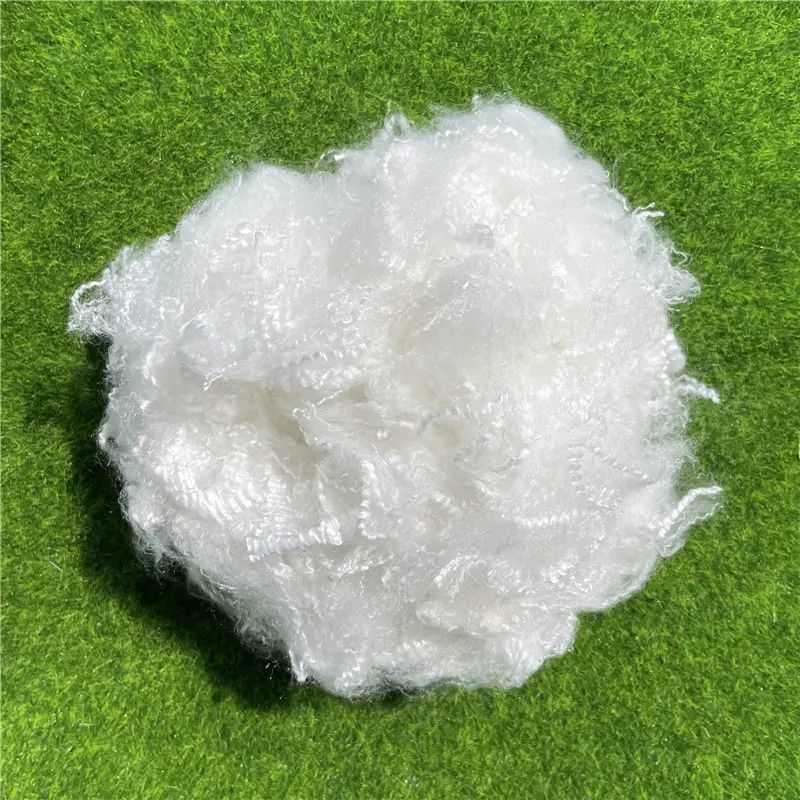
Polyester Staple Fiber in Acoustic Solutions
Polyester staple fiber plays a key role in both non-woven acoustic materials and composite structures. It is often used alone or combined with other fibers to form sound-absorbing pads, felts, and mats.
Key product forms include:
- Non-woven acoustic felts
- Needle-punched mats
- Thermo-bonded fiber pads
- Molded fiber composites
Material Properties Relevant to Soundproofing
PSF’s effectiveness in acoustic applications depends on intrinsic and engineered properties:
Fiber Structure and Air Pores
- The material’s high porosity allows sound waves to enter and interact with its internal structure.
- As sound travels through the fiber network, friction and airflow resistivity dissipate acoustic energy.
- The open-cell structure of non-woven PSF mats enhances absorption of mid to high frequencies.
Density and Thickness
- Greater fiber density and pad thickness improve sound absorption, particularly at lower frequencies.
- Manufacturers tailor these parameters to meet targeted NVH performance.
Thermal Stability
PSF performs well across automotive temperature ranges, maintaining structural integrity in engine bays, door panels, and underfloor areas.
Moisture Resistance
Polyester’s hydrophobic nature prevents moisture absorption, reducing risks of mold, rot, and weight gain over time.
Manufacturing Processes
PSF-based acoustic materials are produced through a range of industrial manufacturing processes:
Fiber Preparation
PET pellets are melted, extruded, and drawn into fibers. Staple fibers are then cut to specified lengths.
Web Formation
Staple fibers are opened and laid into a random web using carding or air-lay systems.
Bonding Techniques
Depending on application requirements, webs are bonded using:
- Needle punching: Mechanical entanglement increases strength and thickness.
- Thermal bonding: Heat and pressure fuse fibers, improving stability and rigidity.
- Chemical binders: Adhesives may be used to enhance performance.
Composite Assembly
For premium acoustic parts, PSF layers are laminated with foams, films, or barrier layers to achieve specific sound blocking and absorption characteristics.
Key Automotive Applications
Polyester staple fiber is incorporated in various areas of the vehicle to mitigate noise and improve comfort.
Engine Compartment Insulation
PSF felts are used under hoods and around engine mounts to absorb high-frequency noise and reduce engine transmission into the cabin.
Floor and Underbody Absorption
Non-woven fiber mats placed on floor pans and underbody shields dampen road and tire noise before it enters the passenger compartment.
Door Panel Liners
PSF sound pads integrated into door liners help block wind buffeting and reduce resonances.
Headliners and Roof Insulation
Layered PSF composites in headliners enhance acoustic comfort and also contribute to thermal insulation.
Trunk and Wheel Arch Liners
PSF mats placed in these areas help reduce tire roar and road impact noise.
Acoustic Performance Metrics
Automotive acoustics engineers measure performance with parameters such as:
- Noise Reduction Coefficient (NRC): A standard metric for evaluating sound absorption performance.
- Transmission Loss (TL): Measures sound blocking ability.
- Sound Pressure Level (SPL) reduction: Quantifies decibel reduction.
PSF materials are engineered to provide high NRC values (typically 0.6–0.9 in mid-high frequency ranges) while maintaining low mass and thickness — crucial for automotive applications where space and weight are limited.
Advantages of Polyester Staple Fiber
PSF offers multiple advantages for automotive soundproofing:
Lightweight and Flexible
Compared to traditional materials like rubberized asphalt or heavy foams, PSF pads are lighter, contributing to vehicle weight reduction and improved fuel efficiency.
Cost-Effective
Polyester fiber production is well-established, scalable, and cost-competitive compared with specialized acoustic foams or fiber blends.
Easy to Process and Install
PSF materials can be easily cut, thermoformed, molded, or bonded into complex shapes for panels and cavities.
Environmental Resistance
PSF maintains performance in high humidity, chemical exposure, and temperature extremes — ideal for demanding automotive environments.
Recyclability
PET-based PSF can be recycled, contributing to sustainability initiatives in automotive manufacturing.
Challenges and Limitations
While PSF is widely used, there are limitations:
Lower Low-Frequency Absorption
Polyester fiber excels in absorbing mid and high frequencies but may require composite layering with heavier materials to improve low-frequency performance.
Competition with Alternative Materials
Advanced foams, melamine fibers, and multi-layer NVH composites can offer superior performance in specific applications, though often at higher cost.
Thermal Limitations in Extreme Zones
In areas with extremely high heat (e.g., close to exhaust systems), PSF may need reinforcement with heat-resistant materials.
Innovations and Emerging Trends
The automotive industry continues to push acoustic performance higher while seeking sustainability and weight reduction. Key trends include:
Hybrid Composites
Combining PSF with natural fibers (hemp, kenaf), bio-based binders, or nanomaterials enhances performance and reduces environmental impact.
Simulation-Driven Design
Advanced NVH modeling enables engineers to tailor PSF density and layer structure precisely for target frequency reduction.
Recycled Polyester Fibers
Using recycled PET (rPET) as a source for PSF supports circular economy goals and reduces the carbon footprint of components.
Functional Integration
Manufacturers are integrating acoustic, thermal, and structural functions into single PSF composite parts to reduce assembly steps and costs.
Case Studies: Real-World Uses
Premium Passenger Vehicles
Luxury vehicles often incorporate multi-layer PSF–foam composites to achieve near-studio quietness in cabins, targeting reduced A-pillar and door cavity noise.
Electric Vehicle (EV) Platforms
Because EVs lack engine sound, road and wind noise become dominant. PSF materials are optimized for broader frequency absorption to maintain silent interiors.
Commercial Trucks and EV Buses
In large vehicles, under-floor PSF mats significantly diminish tire-road noise, improving driver comfort and passenger experience during long-haul operations.
Environmental Impact and Regulatory Compliance
Sustainability targets are becoming a critical requirement for automotive manufacturers.
- Regulations like the EU End-of-Life Vehicle (ELV) directives mandate recyclability.
- PSF derived from recycled PET helps meet secondary material content requirements.
- Life cycle assessments (LCAs) show that lightweight PSF parts contribute to fuel efficiency and lower CO₂ emissions over the vehicle’s life.
Selection Criteria for Engineers
When specifying PSF acoustic materials, engineers consider:
| Factor | Importance |
| Acoustic performance | High |
| Weight and thickness limitations | Critical |
| Thermal stability | Medium–High |
| Cost and manufacturability | High |
| Environmental impact / recyclability | Increasingly important |
Material datasheets, acoustic testing results (NRC, TL), and real-world demonstrations guide specification decisions.
Polyester staple fiber is a key material in automotive soundproofing, offering excellent acoustic performance, lightweight design, durability, and cost efficiency. As EV and autonomous vehicle demands grow, PSF will play an increasingly important role in sustainable, high-performance NVH solutions.