
Synthetic fibers dominate global textiles due to their consistent performance, durability, and cost efficiency across apparel, home, and industrial applications. Two of the most common are polyester staple fiber (PSF) and nylon, which differ in composition, properties, performance, and cost.
This comparison examines their cost, mechanical performance, applications, environmental impact, and trends to help manufacturers and buyers make informed decisions.
What Are Polyester Staple Fiber and Nylon Fiber?
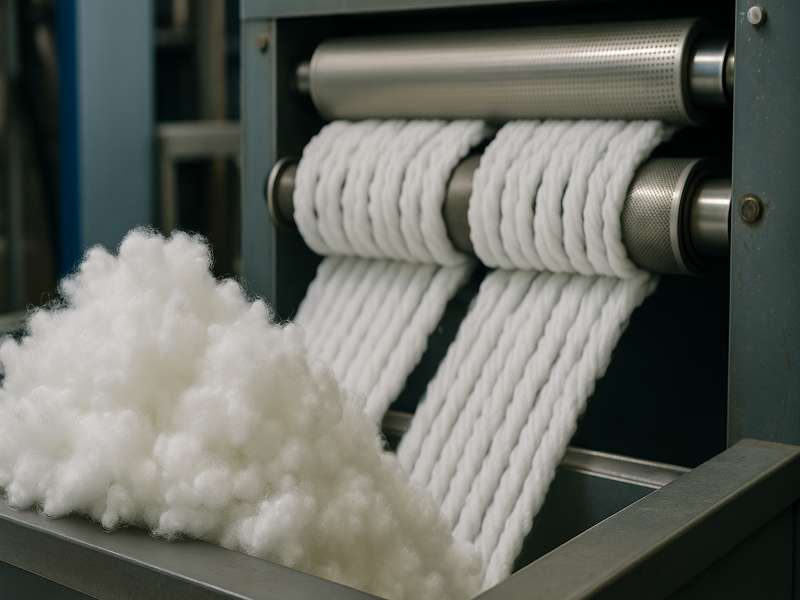
Polyester Staple Fiber (PSF)
Polyester staple fiber refers to synthetic fibers made primarily from polyethylene terephthalate (PET). Called “staple” because the fibers are cut to specific short lengths (often 38–76 mm), PSF is spun into yarns used for textiles, filling materials, and non-woven products.
Common forms of PSF include:
- Crimped fibers (for resilience and loft)
- Low-melt fibers (for bonding in non-woven fabrics)
- Bright and dull fibers (affecting luster)
Polyester is among the most produced polymers globally, with a strong presence in apparel, home textiles, and industrial fabrics.
Nylon Fiber
Nylon refers to a family of synthetic polyamides, first commercialized in the 1930s. The remarkable strength and elasticity of nylon fibers are well known. The most common types used in textile and industrial applications are Nylon 6 and Nylon 66, both offering high mechanical performance.
Unlike polyester staple fiber, which is typically used in short lengths, nylon is often used in filament form for engineered strength applications, although it can also be cut into staple lengths.
Key Differences Between PSF and Nylon
| Property / Attribute | Polyester Staple Fiber (PSF) | Nylon Fiber |
| Base Polymer | PET (Polyethylene Terephthalate) | Polyamide (e.g., Nylon 6, 66) |
| Typical Fiber Form | Staple (short length) | Filament or staple |
| Tensile Strength | Moderate | High |
| Elasticity / Elongation | Moderate | Very High |
| Moisture Absorption | Low | Moderate to High |
| Abrasion Resistance | Good | Excellent |
| UV Resistance | Moderate | Variable (Nylon degrades faster) |
| Heat Resistance | Good | Moderate |
| Cost per kg | Lower | Higher |
| Applications | Apparel, home textiles, stuffing, non-wovens | Industrial yarns, technical textiles, hosiery |
Cost Comparison: Polyester vs Nylon
Cost is often one of the first metrics evaluated when selecting a fiber for manufacturing. While raw material pricing can fluctuate based on oil prices, global demand, and supply constraints, the relative cost relationship between PSF and nylon remains generally consistent.
Raw Material Cost Drivers
Polyester (PSF)
Widely produced and commoditized
Feedstock derived from PTA and MEG (petrochemicals)
High global production capacity → economies of scale
→ Result: Lower price per kg
Nylon
Produced from caprolactam (for Nylon 6) or hexamethylene diamine and adipic acid (for Nylon 66)
More complex polymerization and spinning processes
Smaller production volume relative to polyester
→ Result: Higher price per kg
Estimated Price Ranges
| Fiber Type | Typical Price Range USD/kg | Notes |
| Polyester Staple Fiber | $0.80 – $1.30 | Commodity pricing, volume dependent |
| Nylon Fiber | $1.50 – $3.00+ | Technical grade, specialized types more expensive |
Note: These ranges are indicative; actual prices can vary by region, grade, quality, and market conditions. Durable and specialized nylon variants (e.g., high-tenacity nylon) often command prices above the typical range.
Cost Implications in Manufacturing
- Lower material cost with PSF often translates into lower production cost for consumer goods like bedding, upholstery, and standard apparel.
- Higher material cost with nylon is often justified in performance-critical products where strength, abrasion resistance, or durability is essential.
Performance Comparison
A fiber’s value is not just in its price, but in how well it performs in its intended application.
1. Mechanical Strength and Durability
Nylon is widely recognized for superior tensile strength and abrasion resistance, making it ideal for use in high-stress environments.
PSF provides good strength for everyday textile applications, but is outclassed by nylon when it comes to heavy loads and wear.
| Performance Metric | Polyester Staple Fiber | Nylon Fiber |
| Tensile Strength | Moderate | High |
| Elastic Recovery | Moderate | Very High |
| Abrasion Resistance | Good | Excellent |
| Fatigue Resistance | Moderate | Excellent |
2. Moisture and Comfort Characteristics
Moisture Absorption:
- Nylon tends to absorb more moisture than polyester, which can feel less comfortable in activewear but improves dye uptake.
- PSF remains more hydrophobic (water-repelling), which aids in quick drying and moisture wicking.
Thermal Properties:
- Polyester retains shape and remains stable at a broader temperature range.
- Nylon can lose strength at elevated temperatures, which must be considered in industrial applications involving heat.
3. Chemical and UV Resistance
- Polyester has better resistance to environmental degradation, including UV exposure and many chemicals.
- If nylon is not stabilized with UV absorbers, it is more vulnerable to UV degradation and may deteriorate more quickly outside.
4. Aesthetics and Fabric Behavior
Polyester Staple Fiber:
- Offers versatility in texture and hand feel
- Supports finishes like flame retardants, softness coatings, and anti-pill treatments
Nylon:
- Provides a smooth, strong yarn
- Often used for technical and performance fabrics where appearance combines with durability
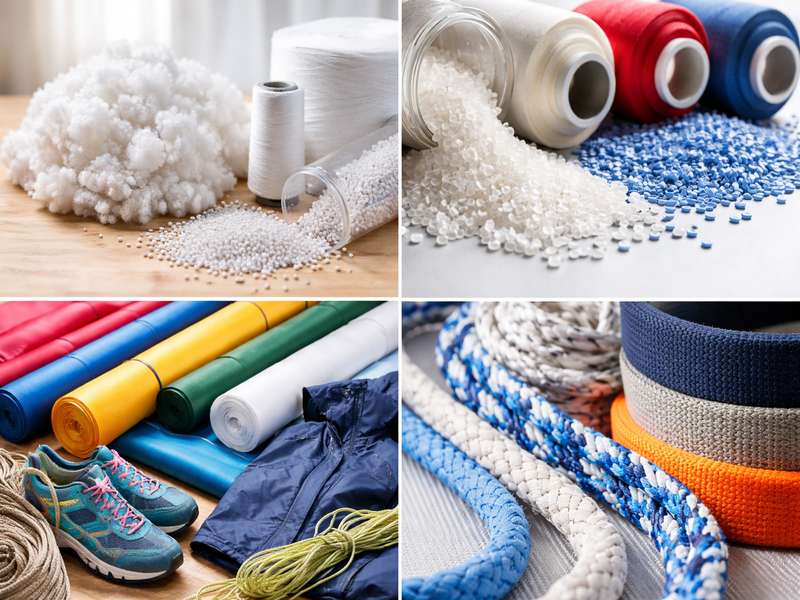
Application Comparison
Textiles and Apparel
| End Use Application | Preferred Fiber | Reasoning |
| T-shirts, casual wear | Polyester Staple Fiber | Cost-effective, moisture-wicking |
| Sportswear | Polyester + Nylon blends | Strength + comfort |
| Hosiery/stockings | Nylon | Elasticity and fit |
| Denim blends | Polyester | Stability, wrinkle resistance |
Industrial and Technical Uses
| Industrial Application | Typical Fiber Choice | Notes |
| Conveyor belts | Nylon | High tensile and abrasion strength |
| Tire cord and industrial threads | Nylon (high-tenacity) | Exceptional load capacity |
| Filters and non-woven fabrics | Polyester Staple Fiber | Hydrophobic, durable |
| Automotive upholstery | Polyester | Cost-efficient and wear-resistant |
Advantages and Limitations
Polyester Staple Fiber
Advantages
- Lower cost and wide availability
- Good resistance to moisture and environmental degradation
- Excellent for bulk filling, mattress pads, and upholstery
- Colorfast and easy to dye
Limitations
- Lower strength compared to nylon
- Moderate elasticity
- Not ideal for high-stress applications
Nylon Fiber
Advantages
- Superior strength and abrasion resistance
- High elasticity and recovery
- Excellent fatigue resistance
- Preferred for technical textiles
Limitations
- Higher raw material cost
- Moisture absorption can impact comfort in apparel
- UV susceptibility without stabilizers
Blending Polyester and Nylon
Many modern textile applications use blends that balance cost and performance:
- Polyester/Nylon blends combine durability and elasticity with cost efficiency.
- For instance, a 70/30 polyester/nylon blend can retain most strength attributes of nylon while lowering overall material cost and improving moisture management.
These blends allow designers to tailor fabric behavior to specific performance criteria.
Environmental and Sustainability Considerations
The environmental debate around synthetic fibers focuses on resource use, recyclability, and microplastics release.
Polyester
- Recyclable PET offers circular economy pathways (e.g., recycled PET from bottles into fiber).
- Lower energy cost per kg compared with nylon production.
- Still contributes to microplastic shedding unless mitigated with fabric finishes.
Nylon
- Higher raw material and energy footprint than polyester
- Some nylon variants are now recycled (e.g., ECONYL®), reducing environmental impact.
When choosing between polyester and nylon, environmental priorities may influence decisions, especially for high-volume consumer products.
Decision Guide: How to Choose
Consider the following steps when deciding between PSF and nylon:
1. Define Performance Requirements
Do you need high tensile strength and abrasion resistance?
→ Nylon
Is moisture management, quick dry, and cost efficiency more important?
→ Polyester
2. Evaluate Cost Constraints
Tight budget and large volume production?
→ PSF
Technical applications justified by product value?
→ Nylon
3. Assess Environmental Goals
Prioritize recycled content and sustainability?
→ Recycled polyester or recycled nylon variants
Minimize ecological footprint without sacrificing performance?
→ Blends or recycled options
4. Match to End-Use Application
| End Use Category | Best Fiber Choice |
| Home Textiles (bedding) | Polyester Staple Fiber |
| Activewear Fabrics | Polyester/Nylon blends |
| High-Performance Industrial | Nylon High-Tenacity Fibers |
| Casual Apparel | Polyester |
Both polyester staple fiber and nylon fiber play vital roles across modern textile and industrial sectors. The choice comes down to cost-performance balance:
- Polyester Staple Fiber excels in cost efficiency, moisture resistance, and broad applicability in consumer textiles.
- Nylon Fiber dominates in strength, durability, and technical performance, justifying its higher cost in specialized applications.
- Blends offer a balanced solution increasingly favored in performance apparel and engineered materials.
Understanding these differences empowers product developers and buyers to make strategic material selections — maximizing performance while controlling cost and environmental impact.