
From basic canvas tents and leather bags, outdoor equipment has advanced significantly. Modern adventurers expect equipment that is lightweight, durable, weather-resistant, and long-lasting. One material has emerged as the backbone of high-performance outdoor gear: Polyester Staple Fiber (PSF). From rugged backpacks to weather-proof tents, PSF plays a central role in delivering the performance that today’s outdoor products demand.
In this article, we’ll explore what polyester staple fiber is, why it’s preferred in outdoor gear, how it compares to alternatives, and real-world applications in backpacks and tents.
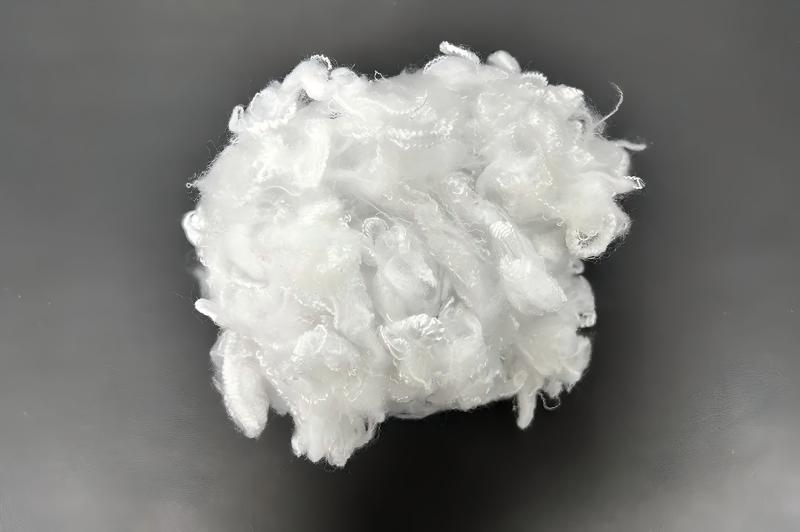
Polyester Staple Fiber: What Is It?
Petrochemical ingredients are used to create polyester staple fiber (PSF), a synthetic fabric. It’s created through a process of melting, extruding, drawing, and cutting continuous polyester filaments into short lengths—typically 3 to 50 millimeters. These fibers are then spun into yarns or used as filling materials.
At its core, PSF combines the strength of synthetic polymers with processing flexibility, making it ideal for a range of textile applications.
Key Characteristics of Polyester Staple Fiber:
- High tensile strength
- Resistance to UV degradation
- Quick-drying and moisture-resistant
- Good thermal properties
- Dimensional stability
- Cost-effective production
Why Polyester Staple Fiber Is Ideal for Outdoor Gear
Sun exposure, wetness, abrasion, impact, and repeated use are all harsh circumstances that outdoor equipment must endure. PSF’s performance properties align closely with these requirements.
1. Durability and Abrasion Resistance
Backpacks and tents experience continual stress—abrasion from gear and terrain, tears from accidental contact with rocks, and repeated packing and unpacking. PSF has excellent abrasion resistance due to its sturdy polymer backbone, which helps garments and gear maintain structural integrity even after heavy use.
High tensile strength makes PSF resistant to stretching and tearing.
Abrasion resistance prolongs gear life.
2. Moisture Control and Quick Drying
Outdoor environments expose gear to rain, sweat, and humidity. PSF doesn’t absorb water like cotton or natural fibers, which means:
Gear dries quickly
Weight is reduced compared to water logged fabrics
Mold, mildew, and odor growth are minimized
This is especially valuable in tents and backpacks used in unpredictable weather.
3. Thermal Efficiency
PSF provides a favorable balance between insulation and breathability. When used as filling material (e.g., in sleeping bag liners or padded backpack straps), PSF traps air effectively, offering lightweight insulation without bulk.
4. Resistance to ultraviolet (UV) rays and weather conditions
With prolonged exposure to sunlight, various materials can deteriorate over time. PSF resists UV breakdown better than many fabrics. This means backpacks and tents retain strength and color longer, even after prolonged sun exposure.
5. Lightweight and High Strength-to-Weight Ratio
Outdoor gear benefits when components are lightweight without sacrificing strength. PSF fulfills this need: a relatively low density combined with high tensile strength yields materials that are strong yet lightweight—critical for backpackers and hikers who need to minimize load.
Performance Comparison: Polyester Staple Fiber vs. Alternatives
To understand why PSF is preferred, it’s helpful to compare it to other materials commonly used in outdoor gear.
Material Comparison for Outdoor Gear
| Property | Polyester Staple Fiber (PSF) | Nylon | Cotton Canvas | Polypropylene |
| Abrasion Resistance | High | Very High | Moderate | Moderate |
| UV Resistance | High | Moderate | Low | High |
| Moisture Absorption | Very Low | Low | High | Very Low |
| Strength to Weight | High | Very High | Low | Moderate |
| Drying Time | Fast | Moderate | Slow | Fast |
| Comfort (Skin Contact) | Moderate | High | High | Low |
| Cost | Low Medium | Medium | Low | Low |
Key Takeaways from the Comparison:
- Nylon has slightly higher raw strength, but poorer resistance to UV and moisture absorption compared to PSF.
- Cotton canvas provides comfort but suffers severely in wet conditions and is much heavier.
- Polypropylene is lightweight and water-resistant but lacks the abrasion resistance and durability of PSF.
- Overall, PSF strikes an optimal balance for outdoor gear—not the absolute best at every performance metric, but consistently high across the board.
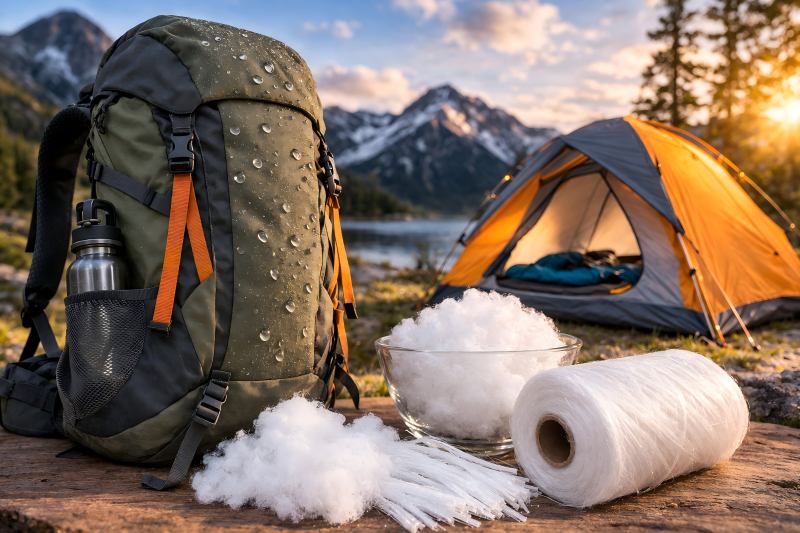
Polyester Staple Fiber in Backpacks
Backpacks are among the most commonly used outdoor items. Whether for day hikes, multi day treks, or travel gear, the materials behind backpacks determine comfort, durability, and performance.
Where PSF Is Used in Backpacks:
| Backpack Component | Role of PSF |
| Outer Fabric | Provides durability and abrasion resistance |
| Inner Lining | Improves moisture management and structural stability |
| Padding | PSF filling offers lightweight comfort and cushioning |
| Shoulder Straps | PSF enhances comfort and shock absorption |
| Webbing Reinforcement | Adds strength without excessive weight |
Backpack Performance Benefits with PSF:
- Less weight without sacrificing strength: PSF yarns contribute to a robust fabric that doesn’t add unnecessary bulk.
- Long service life: Abrasion resistance ensures backpacks maintain their structure even in rough terrains.
- Moisture management: Lining fabrics made with PSF reduce internal condensation and keep contents drier.
Backpack Performance Attributes with PSF
| Attribute | Benefit |
| Water Shedding | Keeps interior dry when paired with coated fabrics |
| Abrasion Resistance | Resists scuffs and friction wear |
| Weight Reduction | Easier to carry for long distances |
| Thermal Comfort | Heat is not overly trapped by padding. |
| Ease of Care | Washable and rapidly drying |
To improve waterproofing and abrasion performance, outdoor backpack manufacturers usually mix PSF with coatings like polyurethane (PU) or thermoplastic polyurethane (TPU).
Polyester Staple Fiber in Tents
Tents require fabrics that handle wind, rain, temperature swings, and packability. PSF plays a strong role in these areas:
Advantages of PSF in Tent Fabrics:
- High structural strength: PSF yarns resist tearing under wind stress.
- Weather resistance: Maintains stability and strength in diverse climates.
- Low moisture absorption: Helps prevent sagging when exposed to rain.
- Ease of Packability: Lightweight fibers help tents compress into smaller packs.
PSF can be woven into tent body fabrics, fly sheets, and mesh panels. It also is frequently used as reinforcement or in composite materials.
Tent Fabric Properties with PSF
| Property | Performance |
| Tensile Strength | High |
| UV Stability | High |
| Water Resistance | Moderate (improved with coatings) |
| Weight | Lightweight |
| Flexibility | Good |
| Breathability | Good |
Compared to natural fibers such as canvas, PSF reduces weight significantly while improving resistance to environmental stressors.
Enhancements and Coatings with PSF Gear
While PSF provides a strong foundation, many outdoor materials are enhanced with coatings and lamination to broaden capabilities:
| Coating/Enhancement | Purpose |
| PU Coating | Waterproofing and abrasion resistance |
| DWR (Durable Water Repellent) | Beads moisture for shedding |
| TPU Lamination | Increases tear strength and water barrier |
| Ripstop Weaving | Inhibits tear propagation |
These enhancements work synergistically with PSF’s base properties to deliver optimized gear.
Environmental Considerations
Polyester is a petrochemical product, and sustainability considerations have pushed gear manufacturers to innovate:
Recycled Polyester Staple Fiber:
- Recycled PET bottles are converted into PSF.
- Reduces reliance on virgin fossil resources.
- Offers performance comparable to virgin PSF.
Bi-Component and Advanced PSF Options:
PSF can be engineered for specific outdoor needs.
Specialty fibers improve flame resistance, UV stability, or biodegradation control.
Real-World Gear Examples
Backpacks:
- Adventure and hiking backpacks that balance load distribution.
- Technical mountaineering packs need high abrasion resistance.
- Travel packs where durability and lightweight are essential.
Tents:
- Lightweight backpacking tents where every ounce matters.
- Weather resistance and durability are essential for family camping tents.
- Expedition tents are designed for high winds and extreme weather.
Future Developments in Materials for Outdoor Gear
Polyester staple fiber is still developing:
Eco-Friendly Variants
Recycled and bio-based polyester fibers are gaining traction. These materials reduce carbon footprint while maintaining outdoor performance.
Smart Fibers
Integration of nanotechnology and smart coatings—such as self-cleaning and antimicrobial finishes—enhances gear performance.
Hybrid Fabrics
Combining PSF with other high-performance fibers (e.g., aramid, nylon blends) to develop next-generation textiles with extraordinary strength and weight profiles.
Polyester staple fiber has earned its place as a cornerstone material in outdoor gear—from backpacks to tents—because it delivers a compelling blend of:
- Lightweight strength
- Moisture resilience
- Durability under stress
- UV and weather resistance
- Cost-effective performance
While alternatives like nylon, canvas, and polypropylene have strengths of their own, PSF consistently offers balanced performance that aligns with the diverse needs of outdoor enthusiasts.
With innovations in recycling, reinforcement, and fiber engineering, polyester staple fiber will continue to shape the next generation of outdoor gear—keeping adventurers comfortable, protected, and ready for whatever nature throws their way.