
Polyester Staple Fiber (PSF) is a highly versatile synthetic fiber used across textiles, nonwovens, automotive, home, and industrial applications. Its key advantage is customizability—parameters like denier, cut length, and finish can be engineered to achieve specific performance, aesthetics, and processing needs. These factors influence properties such as softness, strength, durability, insulation, and processability.
Understanding Customization in PSF
PSF customization is essential because no single fiber specification can meet all application requirements. Manufacturers adjust fiber parameters during production—such as spinneret size, drawing process, and finishing treatments—to create fibers with desired properties.
Key customizable factors include:
- Denier (fiber thickness)
- Cut length (staple length)
- Surface finish (siliconized, non-siliconized, etc.)
- Crimp level and fiber structure (hollow vs solid)
- Color and functional additives (e.g., flame retardant)
Among these, denier, length, and finish are the most critical variables influencing performance and cost.
Denier: Controlling Fiber Thickness and Performance
What is a Denier?
The conventional unit of measurement for fiber thickness is a denier, which is the weight in grams of 9,000 meters of fiber.
- Low denier = finer, softer fibers
- High denier = thicker, stronger fibers
Why Denier Matters
Denier directly affects:
- Softness and hand feel
- Strength and durability
- Bulkiness and insulation
- Application suitability
For example, fine denier fibers are preferred for apparel due to their softness, while coarse fibers are used for filling and industrial applications.
Common Denier Ranges
| Denier Range | Fiber Type | Key Characteristics | Typical Applications |
| 0.8D – 1.5D | Fine denier | Soft, smooth, lightweight | Apparel, spun yarn, textiles |
| 1.5D – 3D | Medium denier | Balanced softness and strength | Blended fabrics, nonwovens |
| 3D – 7D | Coarse denier | Strong, resilient | Upholstery, padding |
| 7D – 15D+ | High denier | Bulky, high loft | Filling, insulation, geotextiles |
Fine denier PSF (below 3D) is especially valued in textile spinning, offering a cotton-like feel and improved comfort.
Cut Length: Optimizing Processability and End-Use
What Is Cut Length?
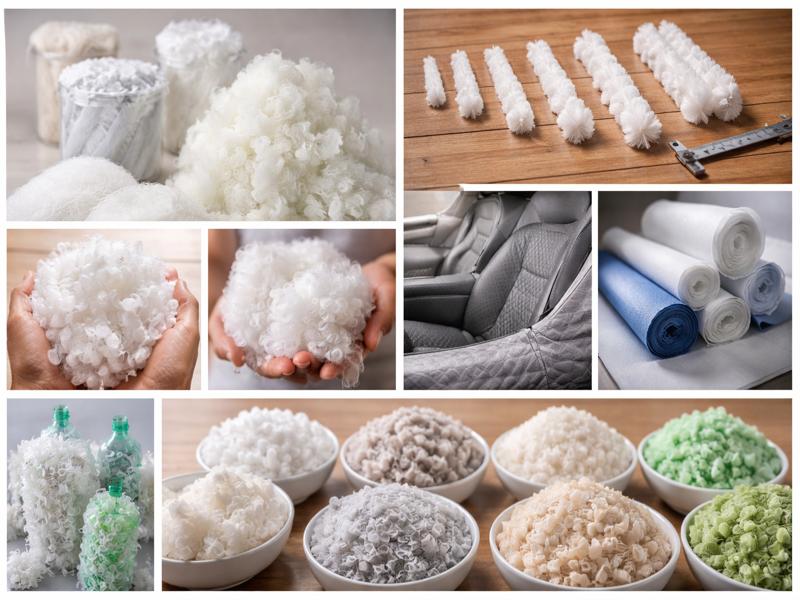
The length of individual staple fibers following the cutting of continuous filaments is referred to as cut length. Depending on the application, PSF lengths typically vary from 10 mm to 120 mm.
Importance of Fiber Length
Cut length influences:
- Spinning performance
- Fiber cohesion and yarn strength
- Surface texture and appearance
- Processing compatibility
Shorter fibers are easier to process in nonwovens, while longer fibers provide better strength in yarn spinning.
Typical Length Specifications
| Cut Length (mm) | Characteristics | Best Applications |
| 10 – 25 mm | Very short fibers, high dispersion | Nonwoven wipes, filters |
| 25 – 38 mm | Good blending capability | Blended yarns, textiles |
| 38 – 51 mm | Standard textile length | Spinning yarn, apparel |
| 51 – 64 mm | Strong bonding and durability | Industrial fabrics |
| 64 – 120 mm | High strength, coarse structure | Carpets, geotextiles |
For example, lengths between 38 mm and 64 mm are commonly used because they balance processability and strength.
Length vs. Performance
- Short fibers→ smoother surface, easier processing
- Long fibers→ stronger yarn, better durability
Selecting the right cut length is essential for optimizing both manufacturing efficiency and product quality.
Finish Options: Enhancing Surface Properties
Surface finish refers to chemical or physical treatments applied to PSF to improve handling, performance, or feel.
Key Finish Types
Siliconized Finish
- Coated with silicone oil
- Smooth, soft, and slippery texture
- Reduced fiber friction
Applications:
- Pillow filling
- Cushions and bedding
- Plush toys
Non-Siliconized Finish
- No silicone coating
- Higher friction between fibers
- Better cohesion in processing
Applications:
- Spinning yarn
- Nonwoven fabrics
- Industrial textiles
Slick Finish (Low Friction)
- Enhances fiber movement
- Improves filling uniformity
Functional Finishes
Advanced PSF solutions include:
- Flame-retardant finish
- Antibacterial finish
- Hydrophilic or moisture-wicking treatment
- Anti-static finish
These finishes expand PSF use into specialized industries such as healthcare, automotive, and construction.
Structural Variations in PSF
Beyond the denier and finish, structural customization plays a major role.
Solid vs Hollow Fibers
- Solid fibers: Dense, strong, and smooth
- Hollow fibers: Lightweight, better insulation, more bulk
Conjugated Fibers
- Combine two polymers
- Improve elasticity and resilience
Crimped Fibers
- Provide bulk and cohesion
- Improve spinning and filling performance
Custom PSF Solutions by Application
Different industries require tailored PSF specifications.
Application-Based Customization Table
| Industry | Denier | Length | Finish | Key Requirements |
| Apparel & Textiles | 0.8–1.5D | 32–51 mm | Non-siliconized | Softness, comfort |
| Nonwoven Fabrics | 1.5–6D | 25–51 mm | Functional | Processability, uniformity |
| Filling (Pillows, Cushions) | 6–15D | 32–64 mm | Siliconized | Bulk, softness |
| Automotive Interiors | 3–10D | 38–64 mm | Flame-retardant | Durability, safety |
| Geotextiles | 6–15D | 38–64 mm | Non-siliconized | Strength, stability |
| Insulation Materials | 7D+ | 51–120 mm | Hollow | Thermal efficiency |
This table highlights how denier, length, and finish must be aligned with performance goals.
Virgin vs Recycled PSF Customization
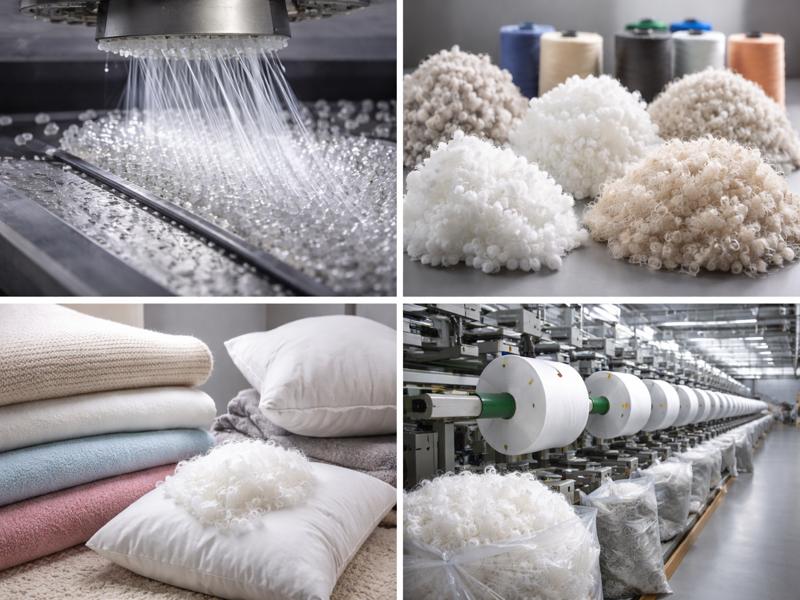
Modern PSF solutions increasingly include recycled polyester staple fiber (RPSF) made from PET bottles.
Key Differences
| Property | Virgin PSF | Recycled PSF |
| Raw material | Petrochemical | Recycled PET |
| Consistency | Higher | Slight variation |
| Sustainability | Lower | High |
| Cost | Higher | More competitive |
| Applications | Premium textiles | Nonwovens, filling |
Recycled PSF offers a more sustainable option while maintaining similar functional properties, making it popular across industries.
Factors to Consider When Choosing Custom PSF
When selecting a custom PSF, buyers should evaluate:
End-Use Requirements
- Softness vs durability
- Strength vs flexibility
Processing Method
- Spinning vs nonwoven
- Filling vs industrial use
Cost Efficiency
- Higher denier often reduces cost
- Recycled PSF offers savings
Environmental Compliance
- Sustainability certifications
- Recycled content requirements
Performance Standards
- Tensile strength
- Elongation and resilience
Future Trends in Custom PSF Solutions
Sustainable Materials
Recycled PSF is becoming mainstream due to environmental concerns and regulatory pressure.
Functional Fibers
Demand is increasing for:
- Flame-retardant fibers
- Antimicrobial fibers
- Moisture-management fibers
High-Performance Applications
PSF is expanding into:
- Automotive lightweight materials
- Construction geotextiles
- Medical textiles
Smart Manufacturing
Advanced production technologies allow:
- More precise denier control
- Uniform fiber length
- Custom finishes at scale
Custom PSF solutions provide exceptional flexibility across industries. Manufacturers can maximize performance, affordability, and sustainability by modifying denier, cut length, and finish.
- Denier: affects softness, strength, and suitability
- Length: impacts processing and durability
- Finish: enhances surface properties and functionality
As demand for specialized and sustainable materials grows, optimized PSF enables better products, improved efficiency, and a competitive advantage.