
Polyester staple fiber is widely used in spinning, nonwoven, home textile, filling, and industrial textile production. For textile mills, choosing PSF is not only about price. The right fiber affects carding, yarn evenness, fabric strength, dyeing stability, efficiency, and customer satisfaction.
Made from PET, polyester offers good strength, durability, wrinkle resistance, and dimensional stability for many textile applications.
Quick Procurement Overview
| Procurement Item | What to Check | Why It Matters |
| Fiber denier | 0.8D, 1.2D, 1.4D, 1.5D, 2D, 3D, 6D, 15D | Affects softness, yarn count, web structure, and end use |
| Cut length | 32mm, 38mm, 44mm, 51mm, 64mm, 76mm | Must match spinning or nonwoven process |
| Tenacity | Low, medium, high tenacity | Influences yarn strength and fabric durability |
| Crimp | Crimp number and crimp stability | Affects fiber cohesion, carding, and bulkiness |
| Finish oil | Anti-static and processing finish | Affects carding, drafting, fly, and roller wrapping |
| Color | Raw white, optical white, black, dope dyed | Impacts dyeing process and final fabric appearance |
| Virgin or recycled | Virgin PSF or recycled PSF | Affects cost, sustainability claims, and consistency |
| Certification | GRS, RCS, OEKO-TEX, ISO | Important for export orders and brand requirements |
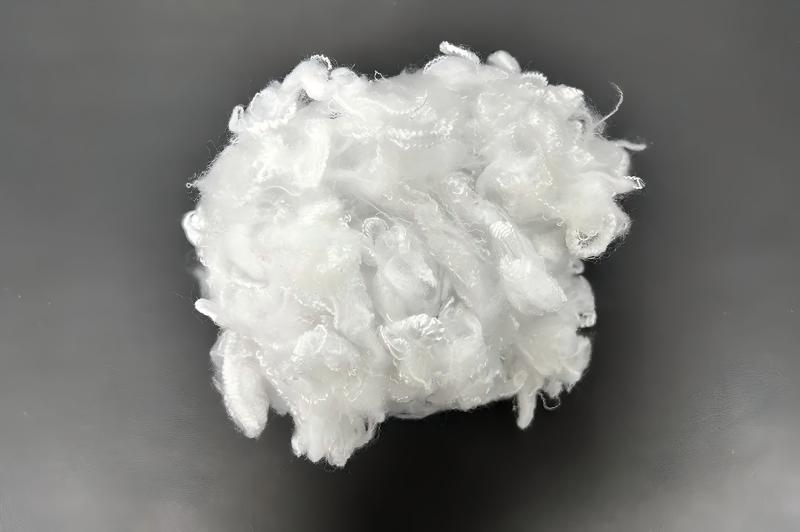
What Is Polyester Staple Fiber?
Polyester staple fiber, often called PSF, is a polyester fiber cut into short lengths. Unlike polyester filament yarn, which is continuous, PSF is processed like cotton or other staple fibers. It can be spun into yarn, blended with cotton, viscose, wool, or acrylic, or used directly in nonwoven, padding, insulation, filling, and technical textile applications.
Textile mills usually select PSF according to denier, cut length, strength, elongation, crimp, shrinkage, color, and finish. A spinning mill making polyester-cotton yarn will need different fiber specifications from a factory producing needle-punched nonwoven, automotive padding, or hollow conjugated filling fiber products.
Main Types of Polyester Staple Fiber
| Type of PSF | Main Features | Common Applications |
| Solid PSF | Standard fiber structure, good strength | Spinning, nonwoven, industrial textile |
| Hollow PSF | Hollow core, lightweight, and bulky | Pillow, quilt, toy filling, padding |
| Hollow conjugated PSF | Spiral crimp, high resilience | Premium filling, home textile, bedding |
| Siliconized PSF | Smooth hand feel, soft and slippery | Pillow, cushion, plush toys |
| Low-melt PSF | Melts at lower temperature for bonding | Thermal bonding, mattress, automotive nonwoven |
| Dope dyed PSF | Color added during fiber production | Black fiber, colored nonwoven, automotive textile |
| Recycled PSF | Made from recycled PET materials | Sustainable textiles, filling, nonwoven |
Virgin PSF is usually preferred when mills require high consistency, cleaner color, and tighter technical control. Recycled PSF is widely used when buyers need lower cost, sustainability positioning, or GRS/RCS recycled content claims. According to Textile Exchange, RCS and GRS are intended to facilitate chain of custody and third-party certification of recycled materials; GRS also incorporates extra social, environmental, and chemical requirements.
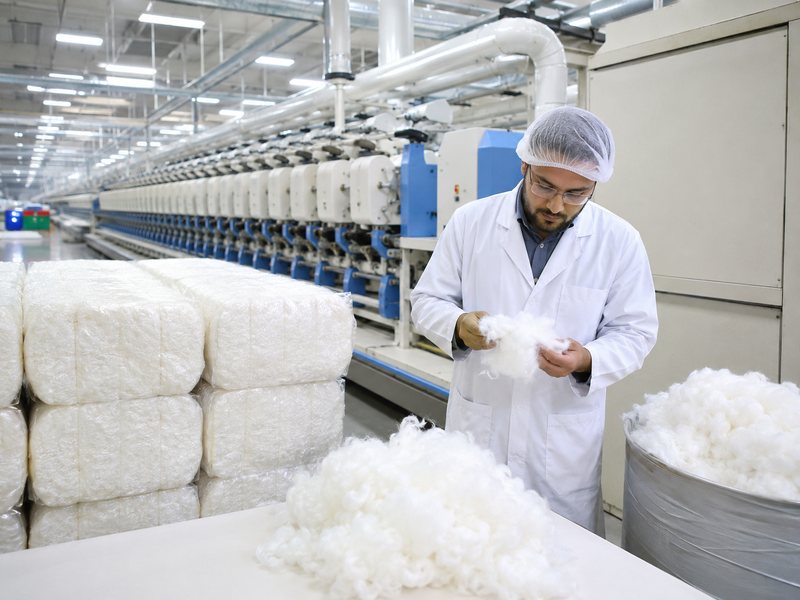
Key Specifications Textile Mills Should Confirm
1. Denier
Denier refers to fiber thickness. Lower denier fibers are finer, softer, and suitable for finer yarns or soft nonwoven products. Higher denier fibers are stronger, coarser, and often used in filling, geotextiles, automotive materials, and industrial fabrics.
For spinning mills, common PSF deniers include 0.8D, 1.2D, 1.4D, and 1.5D. For filling and nonwoven products, 3D, 6D, 7D, 15D, or higher may be used.
2. Cut Length
Cut length must match the processing system. For cotton-type spinning, 32mm to 38mm is common. For worsted spinning or certain nonwoven processes, longer cut lengths may be required. If the cut length is not suitable, mills may face poor carding, high waste, weak yarn, uneven sliver, or poor blending.
3. Tenacity and Elongation
Tenacity affects yarn strength and fabric durability. High-tenacity PSF is often used for industrial textiles, sewing threads, and technical fabrics. Elongation affects processing stability and fabric performance. A fiber with very low elongation may break easily during processing, while excessive elongation may affect yarn control.
4. Crimp
Crimp helps fibers hold together during opening, carding, drawing, and spinning. Too little crimp can cause poor cohesion and weak sliver. Too much crimp can increase neps, entanglement, and carding difficulty. For filling applications, crimp also affects bulkiness, resilience, and hand feel.
5. Finish Oil
Finish oil is critical for textile mills. It influences anti-static performance, fiber-to-fiber friction, fiber-to-metal friction, opening behavior, carding stability, and drafting performance. Poor finish control can cause roller wrapping, high fly, static electricity, uneven card web, and frequent machine stoppage.
PSF Specification Selection by Application
| Application | Recommended Fiber Features | Key Procurement Focus |
| Ring spinning | Fine denier, cotton-type cut length, stable crimp | Evenness, low neps, good carding |
| Open-end spinning | Good opening, controlled short fiber, stable finish | Low waste, consistent sliver |
| Polyester-cotton blend | Similar cut length to cotton, good blending behavior | Dyeing stability and fiber compatibility |
| Nonwoven fabric | Medium to high denier, stable crimp, low melt option if needed | Web uniformity and bonding performance |
| Filling material | Hollow or hollow conjugated, siliconized finish | Bulkiness, resilience, softness |
| Automotive textile | Dope dyed, low VOC, high durability | Color consistency, thermal stability |
| Geotextile | Higher denier, high strength | Tensile strength and durability |
Virgin PSF vs Recycled PSF
Both virgin and recycled polyester staple fiber can be useful, but mills should not buy them using the same evaluation method.
Virgin PSF usually offers better consistency in whiteness, strength, impurity control, and dyeing performance. It is often preferred for higher-end spinning, export fabrics, uniform dyeing, and applications requiring strict technical stability.
Recycled PSF can offer cost advantages and sustainability value. However, buyers should carefully check raw material source, color consistency, impurity level, odor, batch stability, and certification documents. For sustainability claims, mills should request valid transaction certificates, scope certificates, and chain-of-custody documents where applicable. According to Textile Exchange, GRS incorporates processing standards pertaining to dangerous chemicals and social or environmental production in addition to verifying and tracking recycled raw materials throughout the supply chain.
Quality Testing Before Bulk Purchase
Before signing a long-term contract, textile mills should request samples and test them on actual production lines. Laboratory data is useful, but machine performance is more important.
| Test Item | What to Measure | Why It Matters |
| Denier deviation | Fiber fineness consistency | Affects yarn count and fabric feel |
| Cut length distribution | Average and variation | Affects carding, drafting, and waste |
| Tenacity | Breaking strength | Affects yarn and fabric strength |
| Elongation | Stretch before break | Affects processing stability |
| Crimp number | Crimps per unit length | Affects cohesion and bulk |
| Oil content | Finish level | Affects static and carding |
| Moisture | Moisture level | Affects weight and processing |
| Whiteness | Color value | Affects dyeing and appearance |
| Defects | Black spots, hard fiber, fused fiber | Prevents fabric defects |
| Trial spinning | Yarn U%, neps, breaks | Verifies actual production performance |
For every batch, a reputable provider must to offer a certificate of analysis. However, buyers should also build their own incoming inspection system. Mills should not rely only on supplier data, especially for recycled PSF or large-volume orders.
Checklist for Assessing Suppliers
Just as important as choosing the right standard is choosing the right PSF supplier. A low-priced supplier can become expensive if the mill suffers from high waste, inconsistent yarn quality, delayed shipments, or customer claims.
| Supplier Factor | Questions to Ask |
| Production capacity | Can the supplier support your monthly volume? |
| Batch consistency | Can they keep denier, length, color, and finish stable? |
| Quality control | Do they test every lot before shipment? |
| Technical support | Can they help solve carding, spinning, or dyeing issues? |
| Certifications | Can they provide valid GRS, RCS, OEKO-TEX, or ISO documents? |
| Export experience | Do they understand packing, customs, and documentation? |
| Lead time | Can they deliver during peak season? |
| Complaint handling | Do they have a clear claim and replacement process? |
Because OEKO-TEX STANDARD 100 is a label for textiles tested for hazardous materials from yarn to completed product, consumers frequently seek it for textile products where chemical safety is crucial.
Pricing Factors in PSF Procurement
Polyester staple fiber price is influenced by raw material cost, oil price trends, PET chip price, recycled bottle flake price, fiber type, denier, color, finish, certification, packing, freight, and order quantity.
Special fibers usually cost more than standard solid raw white PSF. For example, hollow conjugated siliconized fiber, low-melt fiber, dope dyed black fiber, flame-retardant fiber, and certified recycled fiber often carry a premium.
When comparing quotations, textile mills should not only compare the price per kilogram. They should calculate the real production cost.
True Cost Calculation
| Cost Factor | Why It Matters |
| Fiber price | Basic material cost |
| Waste rate | Poor fiber may create more waste |
| Machine efficiency | Bad fiber increases stoppage and cleaning |
| Yarn quality | Uneven fiber causes claims and downgrades |
| Dyeing loss | Poor whiteness or contamination increases rework |
| Freight cost | Different packing densities affect logistics costs |
| Certification cost | Certified fiber may be required for export orders |
| Payment terms | Cash flow affects procurement cost |
A fiber that is $0.03/kg cheaper may not be economical if it causes more end breaks, higher waste, lower yarn grade, or customer complaints.
Packing and Logistics Requirements
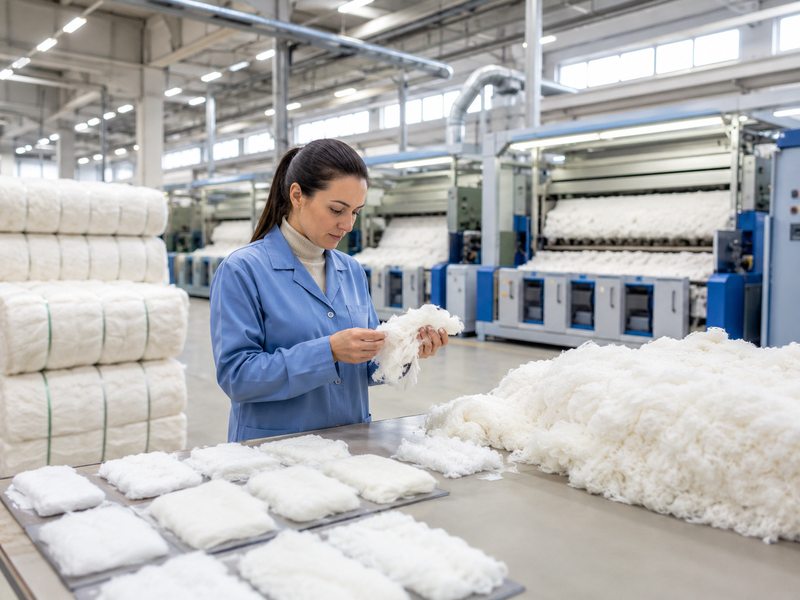
PSF is usually packed in compressed bales. Mills should confirm bale weight, bale dimensions, packing material, moisture protection, container loading quantity, and label information.
Each bale label should clearly show supplier name, product type, denier, cut length, color, batch number, net weight, gross weight, production date, and inspection result. For recycled certified fiber, documents should match the batch and shipment.
Good packing reduces moisture risk, contamination, bale deformation, and warehouse handling problems.
Common Procurement Mistakes
Many textile mills make purchasing decisions based mainly on price. This can lead to hidden production problems.
Common mistakes include buying without trial production, ignoring finish oil compatibility, mixing suppliers without testing, failing to check cut length distribution, accepting unclear certification documents, and not recording batch performance.
For stable procurement, mills should build a supplier scorecard. Each shipment should be evaluated by quality data, machine performance, claim rate, delivery reliability, and communication response.
Final Procurement Recommendations
For textile mills, the best polyester staple fiber is not always the cheapest, but the one that runs smoothly, meets quality targets, reduces waste, supports stable dyeing, and satisfies customer needs.
Before bulk purchasing, confirm end use, denier, cut length, tenacity, elongation, crimp, finish oil, color, certification, packing, and delivery. Test samples in real production and compare suppliers by total cost, not only price.
Choosing the right PSF specification and supplier improves carding, spinning stability, fabric quality, and profitability.