
Polyester is widely utilized in garments, household textiles, industrial materials, and nonwoven fabrics. It comes in a variety of forms, the most popular of which are polyester staple fiber (PSF) and polyester filament yarn (PFY).
Both come from PET, but differ in structure, production, and performance. Knowing these differences helps manufacturers and buyers choose the right fiber for quality, durability, and cost goals.
This article compares PSF and PFY, covering how they’re made, their properties, uses, pros and cons, and a comparison table.
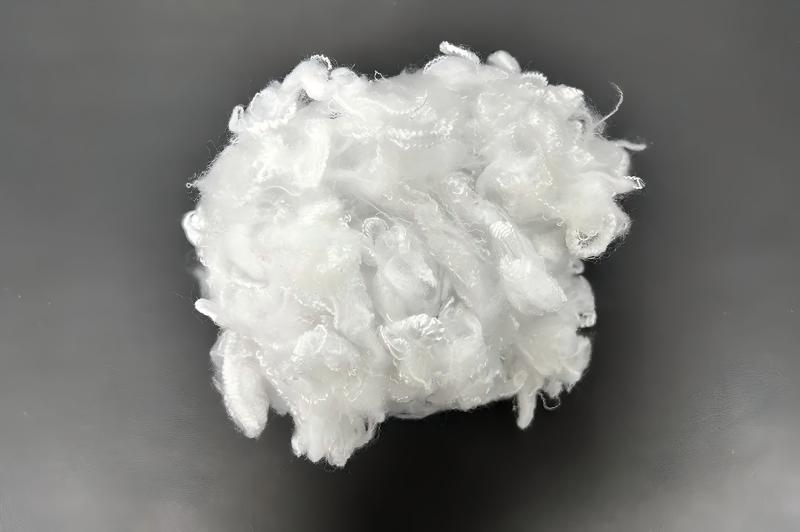
What Is Polyester Staple Fiber (PSF)?
Polyester Staple Fiber is a short-length polyester fiber, typically cut into pieces ranging from 25 mm to 120 mm. These short fibers, which resemble the structure of natural fibers like cotton or wool, are widely utilized in spinning and nonwoven processes.
How PSF Is Produced78
PSF is produced by:
- Polymerization of the PET material
- Melt spinning into long filaments
- Drawing to orient molecules-
- Crimping for better spinning and cohesion
- Cutting into short staple lengths
The final fibers may be solid or hollow, siliconized or non-siliconized, virgin or recycled.
Properties of PSF
- Short, fluffy fiber structure
- Good bulkiness and loft
- Blends easily with natural fibers
- Matte to semi-dull appearance
- Softer hand feel than filament yarn
- Good insulation and resilience
Applications of PSF
Polyester Staple Fiber is used in:
- Yarn spinning (50/50 blends with cotton, rayon, wool, etc.)
- Stuffing and filling (pillows, toys, cushions, quilts)
- Nonwoven fabrics (geotextiles, car interiors, diapers)
- Needle-punched and thermal-bonded fabrics
- Home furnishings and upholstery
PSF’s versatility in both woven and nonwoven applications makes it a dominant material in mass manufacturing.
What Is Polyester Filament Yarn (PFY)?
Polyester Filament Yarn consists of continuous, unbroken filaments produced directly from melt-spinning with no cutting process. The fibers remain long, smooth, and strong throughout the entire production line.
Common forms of PFY include:
POY (Partially Oriented Yarn)
FDY (Fully Drawn Yarn)
DTY (Draw Textured Yarn)
How PFY Is Produced
PFY is manufactured through:
- Polymer melting
- Continuous extrusion through spinnerets
- Drawing and orientation
- Texturing (optional) for bulkiness
- Winding into cones
Since the fibers are not cut, PFY remains a continuous filament, similar to silk.
Properties of PFY
- High tensile strength
- Smooth, continuous surface
- Glossy and uniform appearance
- Low pilling tendency
- Excellent abrasion resistance
- Available in various lusters (SD, Bright, Trilobal)
Applications of PFY
Polyester Filament Yarn is used in:
- Knitted and woven synthetic fabrics
- Sportswear and activewear
- High-strength industrial textiles (ropes, seat belts)
- Sewing thread
- Fashion fabrics like satin and chiffon
- Mesh fabrics and warp knitting
PFY is preferred when high strength, uniformity, and smoothness are required.
Key Differences Between PSF and PFY
The fundamental difference lies in fiber length and structure:
PSF = short fibers
PFY = long continuous fibers
This structural difference affects almost every performance characteristic—including strength, softness, fabric texture, and production cost.
Comparison Table: PSF vs PFY
Below is a detailed comparison table for quick reference.
Differences Between Polyester Staple Fiber and Polyester Filament Yarn
| Feature / Parameter | Polyester Staple Fiber (PSF) | Polyester Filament Yarn (PFY) |
| Fiber Length | Short, cut fibers (25–120 mm) | Continuous, uncut filaments |
| Feel & Texture | Soft, cotton-like, bulky | Smooth, silky, uniform |
| Strength | Lower tensile strength | Higher tensile strength |
| Pilling Tendency | Higher | Very low |
| Production Process | Melt spinning + cutting | Continuous melt spinning |
| Appearance | Matte to semi-dull | Glossy or semi-glossy |
| Blending Ability | Excellent with natural fibers | Limited |
| Cost | Usually cheaper | Slightly more expensive |
| Fabric Type | Woven casual wear, knit fabrics, nonwovens | Sportswear, industrial textiles, high-strength fabrics |
| Applications | Toys, fillings, geotextiles, cotton blends | Satin, chiffon, ropes, seat belts, high-performance fabrics |
| Durability | Moderate | High |
| Breathability | Better due to short fiber gaps | Lower but can be engineered |
| Bulkiness | High loft | Low unless textured (DTY) |
| Drape & Flow | Lower drape | Excellent drape |
When to Use Polyester Staple Fiber
PSF is the best choice when you need:
- Cotton-like softness
- High bulk and loft
- Easy blending with natural fibers
- Economical raw materials
- Non-woven fabric production
- Filling material for bedding, furniture, toys
PSF excels in applications where comfort, softness, and cost-effectiveness are top priorities.
When to Use Polyester Filament Yarn
PFY is ideal when you need:
- High mechanical strength
- Smooth and uniform fabric appearance
- Low pilling
- Lightweight yet durable textiles
- High-performance activewear
- Industrial-strength materials
PFY is the preferred choice for fashion fabrics requiring drape and shine, as well as technical textiles requiring longevity and strength.
Advantages and Disadvantages of PSF vs PFY
Advantages of Polyester Staple Fiber
- Soft and natural hand feel
- Excellent blending ability
- Suitable for nonwoven applications
- Cost-effective
- Good insulation and loft
Disadvantages of PSF
- Lower strength
- Higher pilling
- Less uniform yarn
- Limited use in high-performance textiles
Advantages of Polyester Filament Yarn
- High tensile strength
- Smooth and glossy appearance
- Low pilling and abrasion resistance
- Excellent for high-end and technical fabrics
- Lightweight and durable
Disadvantages of PFY
- More expensive
- Less breathable
- Not ideal for blending with cotton/wool
- Can feel less “natural” without texturing
Influence on Fabric Properties
The choice between PSF and PFY changes the behavior of the finished fabric.
Fabrics Made from PSF
- Softer and bulkier
- Better thermal insulation
- More breathable
- More prone to pilling
- Less shiny
- Suitable for casual wear
Fabrics Made from PFY
- Smooth and elegant
- Higher tensile and tear strength
- Lower shrinkage
- Glossy appearance
- Often used in functional or high-end fabrics
Sustainability Considerations
Both PSF and PFY are available in recycled polyester (rPET) forms derived from post-consumer PET bottles.
Recycled PSF (R-PSF)
Widely used in fillings, nonwovens, and yarn spinning.
Recycled PFY (R-PFY)
Used in apparel, automotive textiles, and industrial fabrics.
However, PSF is generally easier and cheaper to produce from recycled feedstock.
How to Choose Between PSF and PFY
To select the right polyester type, consider the following:
Desired fabric appearance
- Soft & cotton-like → PSF
- Smooth & silky → PFY
Strength requirements
- High tensile or industrial strength → PFY
Comfort needs
- Breathable & cozy → PSF
Budget
- Lower cost → PSF
Manufacturing process
- Nonwoven → PSF
- Knitting / Weaving → PFY
Product performance
- Low pilling, long lifespan → PFY
Although polyester staple fiber and polyester filament yarn originate from the same PET raw material, their differences in structure—short fibers versus continuous filaments—lead to distinct properties, performance, and applications.
- Polyester Staple Fiber (PSF) is soft, economical, and ideal for blends, nonwovens, and filling applications.
- Polyester Filament Yarn (PFY) offers high strength, durability, and a smooth, lustrous appearance suitable for high-performance and fashion textiles.
By understanding these differences, textile professionals can select the right polyester type to match their product’s functional, aesthetic, and economic requirements.